
Is Magic Real?…Like really real?
First, in order to answer that question, I would need to define what magic is...

We, (well maybe me), broadly speaking, define magic in two ways; two almost diametrically opposed ways. The first, the simplest, is as the skill of illusion. Magic in this sense is the art and practice of creating an illusion so that it is perceived as reality. In this sense magic is purely theatrical. The audience has agreed to be tricked, they have shown up specifically for that purpose. They want to believe, and because of that they will look for any reason not to believe.
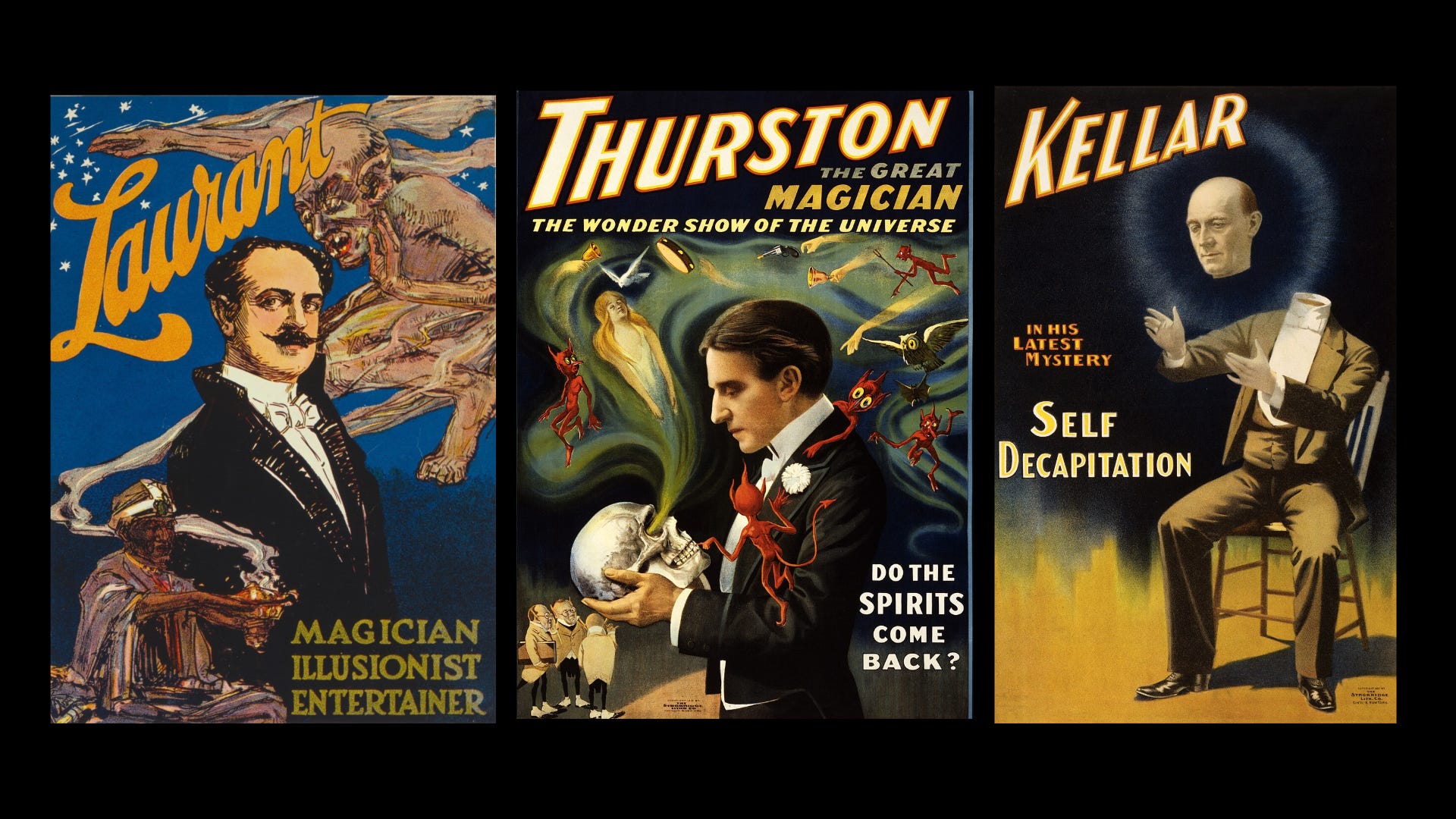
Various magician’s posters late 19th and early 20th century.
‘In this sense magic is purely theatrical. The audience has agreed to be tricked...’
The second more challenging definition of magic is the bending of reality to make something true, to make it in fact a new reality. This type of magic is not necessarily theatrical, it is not performed for an audience, it is performed for the witch, though it may be performed on behalf of someone else. This type of magic is not an illusion. To create reality is magic.
I read somewhere that magic is active participation in the universe. I would add ‘in time’, Magic is active participation in the universe in time. This definition would interpret the universe as not being solely the material construction of the planets, and of the space it occupies but the act of expanding itself, the dance that these bodies are engaged in, the universe is also the motion of every single particle or molecule in existence. Like magic, universe is a verb.
Alistair Crowley, the infamous but rather messed up magician defines magic as: “the Science and Art of causing change to occur in conformity with will.” Marion Weinstein defines magic as “transformation—change—in accordance with natural law and brought about by art and will. Dion Fortune has perhaps the most commonly referenced definition, magic as the art of causing changes to take place in consciousness in accordance with will.
But what is art? What is consciousness? And what is will?
These are all good definitions, and I am inclined to believe them, but, what do they mean? For the purposes of my investigation I am going to focus on one definition, the most broadly accepted definition of Dion Fortune; “magic is the art of changing consciousness at will.” I chose this definition because I like it. It feels complex, like tasting a rich red wine for the first time and your tongue cannot quite make sense of it. Magic is the art of changing consciousness at will.
But what is consciousness? What is art? And what is will? These are not straightforward easy to define concepts, but whether magic is true or not depends on our definition of these constructs.
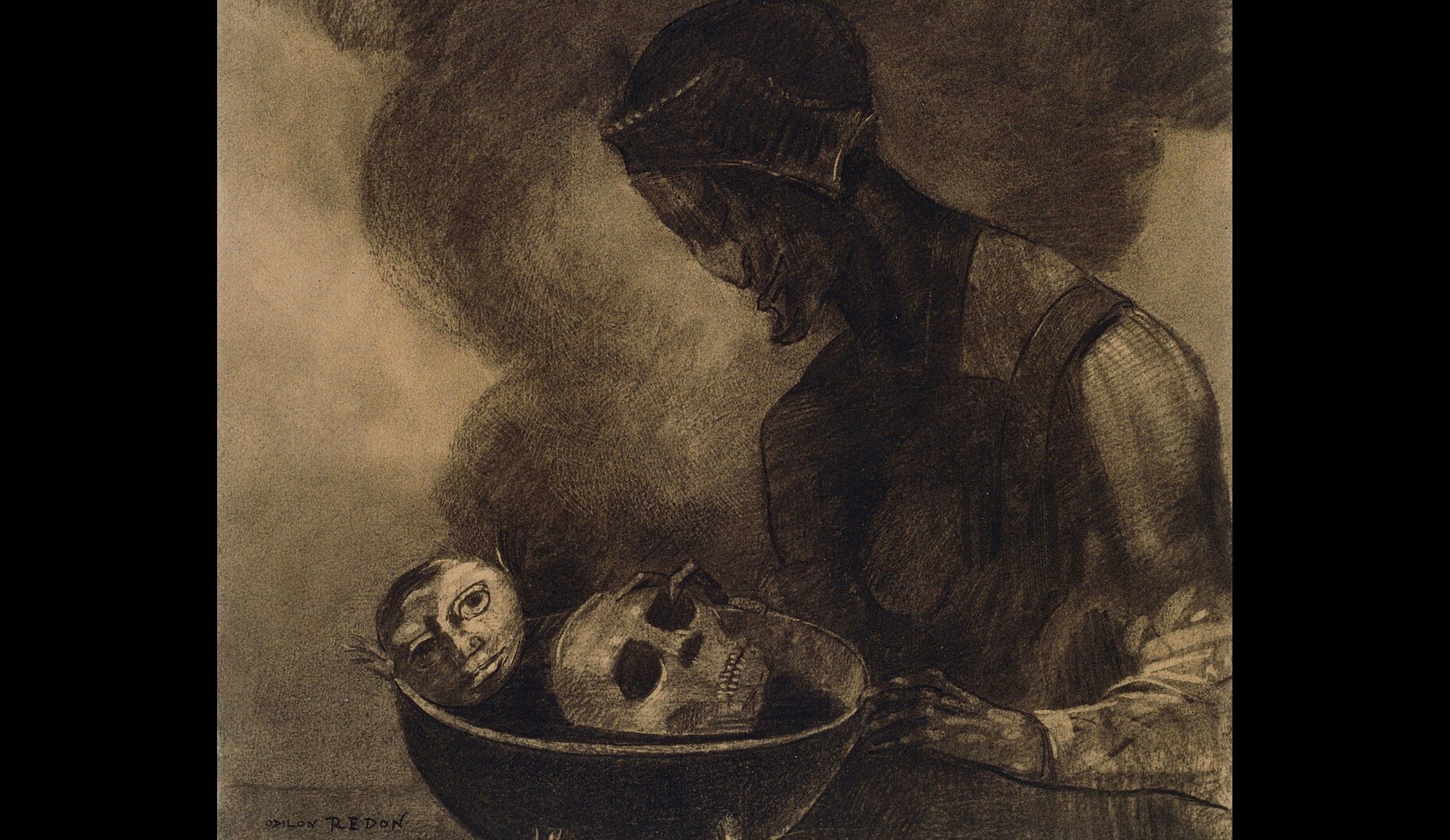
Odilon Redon, Cauldron of the Sorceress, 1879
Delving into this subject seems to raise the spectre of self-helpery. Self-help is not bad, indeed helping your self is likely the only form of improvement that would work, who else is going to help you? If magic is real though, why don’t we all know about it? Why aren’t we all rich, successful, self-actualised people who have transformed our shared social reality into a peaceful, abundant utopia? The answer to this may lie in history, and in humanity’s relationship to magic.
Clearly to undertake a serious study of the history of magic would require a degree in anthropology and a lifetime’s work. At the time of writing this I have neither, so instead I offer my amateur musings, and the faint hope that beginners mind will provide something worth reading.
I really want to understand magic; its history, what it is, and what it means to practice today.
I wonder why we stopped believing in magic? Is there is a way that magic and reason can co-exist? I wonder what a study of the science of magic - that is the repeatable practice of magic that has the same or similar results would look like? If I deconstruct the definition ‘magic is the art of changing consciousness at will’, could it lead to a deeper understanding of magic, art, consciousness and will?